
Can small, sensible habits really change our body and health for good? We ask this because many quick fixes fail us. We want a plan that fits a busy American life and gives steady results.
In this article we set realistic goals for what “burning fat” means: lower body weight over time, more energy, and better health markers. We focus on science-backed habits that improve appetite control, daily movement, and smarter food choices.
We’re not selling a single trick. Instead, we stack small actions you can repeat week after week — slow eating, portion cues, more protein and fiber, hydration, cutting sugary drinks, moving more, building muscle, and better sleep and stress habits.
The CDC’s guidance on aerobic activity plus strength training informs our approach, so each tactic links to how it cuts calories in or raises calories out. Let’s treat this as a friendly, practical guide for our weight loss journey.
Key Takeaways
- We focus on measurable outcomes: steady weight drop, energy, and health markers.
- Small, repeatable habits add up more reliably than extreme rules.
- Each tactic targets appetite, movement, or food choices.
- CDC-backed exercise plus strength work supports long-term results.
- Consistency beats perfection in our shared journey.
What “burning fat” really means for weight loss in real life
Real change starts when we know how the body uses stored energy over weeks and months.
A calorie deficit is the non-negotiable starting point. If we consume fewer calories than we burn, the body pulls energy from stored fat. That steady energy gap is what creates measurable weight loss over time.
How metabolism and hormones shape progress
Our metabolism adapts when food intake or activity changes. After fast dieting, resting burn can slow. This is a natural adaptation, not a personal failure.
Two key appetite hormones — leptin and ghrelin — steer hunger and fullness. Short sleep and high stress raise ghrelin and cortisol, which makes cravings harder to resist.
Why spot reduction is a myth
Crunches build muscle but do not selectively remove belly fat. Visceral fat sits around organs; subcutaneous fat is under the skin. Exercise often lowers visceral fat earlier, which improves health even if the mirror changes slowly.
| Factor | Effect on progress | What we can do |
|---|---|---|
| Calorie balance | Controls whether we lose or gain | Track intake and increase activity |
| Sleep & stress | Alters appetite hormone signals | Prioritize 7+ hours and stress tools |
| Exercise type | Builds muscle and reduces visceral fat | Mix cardio with strength work |
A few studies show extreme methods can trigger adaptations that raise the risk of regain. So our focus stays on steady, research-backed habits that manage calories, hunger, and daily energy without extremes.
Weight Loss Breakthrough: 9 Powerful Ways to Burn Fat Naturally
Instead of an all-or-nothing fix, we’ll stack simple habits that stick. Long-term regain hits 80–95% for many people after extreme plans, and very strict diets can lower resting metabolism and appetite-control hormones.
Start simple, one step per week. The CDC suggests building steady activity habits, so our plan adds one or two small changes per week. That helps us avoid big swings and supports gradual weight loss that lasts.
- Pick a single food-environment tweak and one movement habit each week.
- Focus on trends, not daily scale readings; small fluctuations are normal.
- Use a short weekly template: a fix for protein/fiber, hydration, movement, and environment to cut decision fatigue.
- Adapt the same nine methods for office days, travel, or weekends so our lifestyle supports our goals.
Setbacks won’t derail us. We build restart rules so a slip becomes a brief pause, not a return to major weight gain. These aren’t crash diets — they are repeatable changes for our long-term journey.
Slow down at meals to naturally eat fewer calories
When we give taste and time a chance, meals become more satisfying with fewer calories. Slowing our pace helps fullness signals arrive before we keep reaching for more.
Chew thoroughly and give our brain time to register fullness
Chewing more and putting the fork down between bites lets the stomach and brain sync. A 2021 review found slower eaters often have lower BMI, and smaller portions follow naturally.
Practical tactics: count chews, pause after each bite, and sip water between mouthfuls. These steps lower calorie intake without making meals feel strict.
Reduce distracted eating to prevent accidental overeating
Watching TV or scrolling while we eat blurs taste and satiety cues. Studies show distracted eating leads people to eat again sooner and increases overall food intake.
Environment resets are simple: eat at a table, serve one portion, and keep devices out of reach. We don’t need to do this every meal — starting with one slow meal per day is a realistic plan that supports long-term fat loss and hunger control.
Make portions work for us with simple environment tweaks
A few setup swaps at mealtime make sensible portions feel normal and satisfying. We change cues around the table so smaller servings look right and meals still feel full.
Use smaller plates for higher-calorie foods
Smaller plates make portions appear larger. That visual trick lowers calories without counting. A 2021 review found portion-control plates helped reduce body weight, BMI, waist circumference, and blood lipids in people who used them consistently.
Front-load meals with vegetables
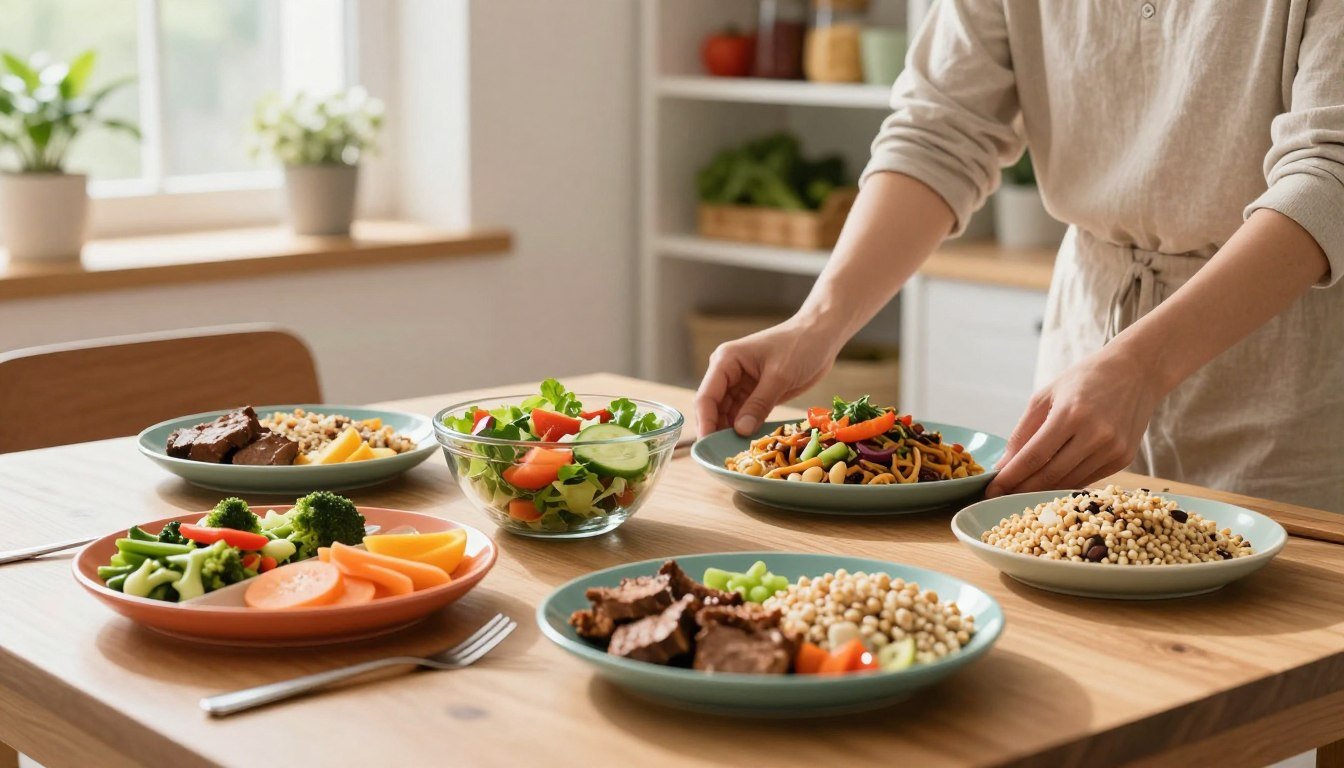
Start with a salad or roasted veggies so fiber fills us earlier. Fill half the plate with vegetables, then add protein, then a smaller portion of starch.
“Begin with vegetables and you leave less room for higher-calorie foods.”
Practical U.S. examples: bagged salad kits, frozen mixed veggies, and pre-cut trays make this quick on busy nights. These small habits lower intake at dinner and support steady fat reduction and lower long-term risk.
Prioritize protein to curb hunger and protect lean muscle
One simple shift — increasing protein at meals — changes hunger, muscle maintenance, and how our body uses calories.
How protein increases fullness and supports thermogenesis
Protein raises satiety more than carbs or fat, so we feel satisfied longer and snack less. It also increases the energy the body uses to digest food, a process called thermogenesis, which can help burn calories over time.
Protein targets we can aim for
Research suggests toward 1.2–1.6 g per kg of body weight can help preserve or grow muscle mass while we reduce calories. A 2020 study found a higher-protein breakfast (eggs and toast) cut later hunger and lowered calorie intake versus cereal.
Easy high-protein choices and practical upgrades
We can rotate familiar foods that fit U.S. grocery routines: eggs, Greek yogurt, fish, lentils, quinoa, and lean poultry. Small swaps work well — add Greek yogurt to a snack or choose eggs over sugary cereal for breakfast.
| Goal | Per day target | Easy examples |
|---|---|---|
| Protein aim | 1.2–1.6 g/kg body weight | 3 eggs, 1 cup Greek yogurt, 4 oz fish |
| Per meal guide | 20–30 g protein | 2 eggs + toast, ¾ cup lentils, 1 cup cottage cheese |
| Quick swaps | Higher protein snack | Greek yogurt instead of chips; tuna instead of mayo salad |
Sustainability matters: we don’t chase perfection. Hitting higher-protein choices most days helps support diet goals, protect muscle, and keep our metabolism working for us.
Fill up on fiber-rich foods for steady energy and fewer cravings
Filling meals with fiber helps us stay full longer and smooths out energy swings.
How it works and why viscous fiber matters
Fiber increases fullness by adding bulk and slowing digestion. That means steadier energy and fewer sudden hunger urges.
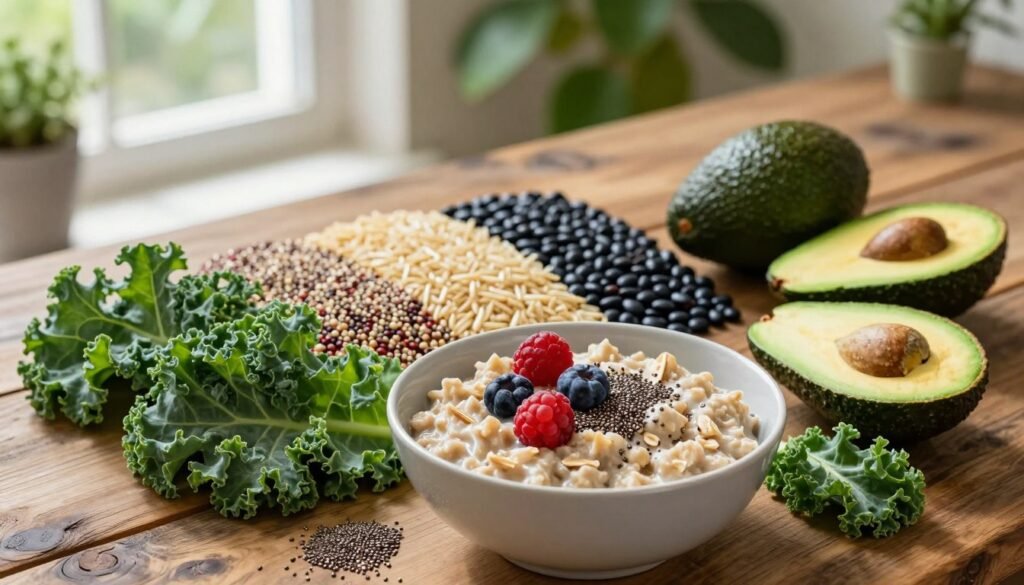
Viscous fiber—found in oats, beans, and flaxseed—forms a soft gel with water. This slows stomach emptying and keeps us satisfied for more hours.
Daily targets and easy ways to hit them
U.S. guidance suggests about 28 g per day for women and 34 g per day for men. We don’t need strict tracking to reach this.
- Start breakfast with oats and berries.
- Add beans or lentils to salads and bowls.
- Snack on fruit or a small handful of flax-enriched yogurt.
High-fiber foods to keep on rotation
| Food | Typical fiber (per serving) | Quick idea |
|---|---|---|
| Oats | 4 g (½ cup dry) | Oatmeal with berries |
| Beans | 7–9 g (½ cup) | Bean bowl with veggies |
| Brussels sprouts | 4 g (½ cup) | Roasted with olive oil |
| Flaxseed | 3 g (1 tbsp) | Stir into yogurt or smoothies |
“Fiber-rich meals reduce cravings and often cut total daily intake, helping our diet and body respond better over time.”
Pacing tip: raise fiber slowly and drink more water so digestive comfort stays good. These changes support heart health and steady progress in fat-related goals while improving overall health.
Hydrate strategically to reduce intake and swap out liquid calories
A few simple sips at the right times can trim overall intake and make meals feel more filling. We can use plain water and a few routine swaps to cut empty calories without changing our food. This is an easy, daily habit that supports steady progress and better health.
Drinking before meals and what studies show
One 2018 study found pre-meal drinking reduced how much food participants ate. A 2015 study reported about 568 ml of water before a meal lowered calorie intake and increased fullness. Drinking a glass 20–30 minutes before eating is a simple step we can test.
Daily targets made visual
Guidance suggests roughly 3.7 L per day for men and 2.7 L per day for women. That equals about 15–16 cups for men and 11–12 cups for women.
| Target | Liters | Visual |
|---|---|---|
| Men | 3.7 L | ~15 cups (3 large bottles) |
| Women | 2.7 L | ~11 cups (2–3 bottles) |
| Pre-meal habit | ~568 ml | 1 large glass before two main meals |
| Quick routine | — | Wake glass, before lunch, before dinner |
Better beverage swaps and common fixes
The fastest calorie cut is often swapping sugary drinks for plain options. Try sparkling water with lime, unsweetened iced tea, or plain chilled water instead of soda or juice. These beverages still feel enjoyable while saving calories and supporting our food goals.
If we forget or get bored, flavored seltzer, a bottle on our desk, and habit cues (glass after brushing teeth) help. Small hydration moves are low-effort and deliver clear benefits for appetite, intake, and long-term health.
Cut sugary drinks to lower calorie intake and belly fat risk
Sugary beverages sneak calories into our day without giving the same feeling of fullness as solid foods. That makes them uniquely disruptive for steady weight progress.

Why liquid calories don’t satisfy like solid food
We can drink many calories fast, but our brain registers less satiety than when we eat. As a result, calories from drinks add up while hunger stays.
Health risks tied to sugar-sweetened drinks
High consumption links with higher BMI, greater risk of type 2 diabetes, and higher heart disease risk. A 2022 review found replacing sweet drinks with low- or no-calorie options often lowers body weight, BMI, and body fat percent.
Eliminating sugary drinks is a concrete first step that protects both our waistline and long-term health.
Practical swaps and a step-down plan
- Start by tracking all beverages for one day to spot easy calories to cut.
- Try half soda / half seltzer for a week, then switch to full seltzer or unsweetened iced tea.
- Watch “healthy halo” drinks: fruit juice, flavored coffee, and bottled smoothies can hide lots of sugar.
- Small swaps add up — sparkling water with lime or cold brew without syrup saves calories with little sacrifice.
“Replacing sugary beverages with low- or no-calorie drinks is linked with reductions in body weight and body fat percentage.”
| Action | Why it helps | Easy example |
|---|---|---|
| Track one day of drinks | Reveal hidden calories | Note every cup, can, and bottle |
| Step-down swap | Reduce sugar gradually | Half soda/half seltzer → full seltzer |
| Replace “halo” drinks | Cut surprising calories | Small juice → whole fruit or plain water |
| Daily habit | High-impact, low effort | Glass before meals; seltzer between meals |
Quick self-check: track beverages tomorrow, pick one swap, and repeat it daily. This single change often delivers one of the biggest calorie reductions with the least friction.
Move more during the day to burn calories beyond workouts
Small movements across the day can add up to major calorie changes without extra gym time. We’ll show practical ways to increase activity so our weekly routine supports steady progress and health.
CDC weekly guidance and a realistic schedule
The CDC recommends at least 150 minutes of moderate aerobic exercise or 75 minutes vigorous per week, plus two days of resistance training. A realistic plan: 30 minutes brisk walk five days a week and two short strength sessions.
NEAT: the small shifts that add up
NEAT means non-exercise activity thermogenesis — standing, fidgeting, stairs, and micro-walks. These low-effort moves help us burn calories across the day without setting aside formal exercise time.
- Take 5-minute walks every hour during desk days.
- Choose stairs, park farther, or hold walking meetings.
- Stand during calls and pace while thinking.
Why long sitting can blunt benefits
Sitting eight to nine hours a day can reduce the health gains of our exercise, even if we meet weekly targets. A simple break plan — 2–5 minutes each hour — restores circulation and energy.
Build muscle to increase resting calorie burn
Strength work matters. Increasing muscle mass helps us burn more calories at rest and supports durable changes in body composition. Two resistance sessions per week is a practical start.
| Action | Why it helps | Quick example |
|---|---|---|
| Micro-walks | Raise daily energy use | 5 min each hour at work |
| Stair snacks | Short bursts boost activity minutes | 2–3 flights after lunch |
| Strength days | Increase muscle mass and resting burn | 20–30 min resistance twice weekly |
Our lifestyle counts: workouts help, but what we do the other 23 hours shapes results. Small, consistent activity choices reduce risk and make steady progress more likely for people with busy weeks.
Protect fat loss with sleep, stress management, and a sustainable mindset
Good sleep and calm stress levels protect the results we earn from food and exercise.
Sleep is a frontline protector. When we miss sleep, leptin and ghrelin shift in a way that raises hunger and cravings. The CDC recommends 7+ hours nightly for most adults to support appetite control and overall health.
Stress, cortisol, and overtraining
Chronic stress raises cortisol, which can push us toward higher-calorie choices and abdominal gain. Pushing too hard with exercise without proper rest can keep cortisol high and backfire.
Avoiding yo-yo dieting and metabolic slowdown
Extreme diets and big calorie cuts often lead to regain and slower resting metabolism. A steady target of about 1–2 pounds per week is safer and more durable for body weight changes.
When to seek professional help
If we face repeated regain, major medical issues, or need tailored plans, seeing a healthcare professional or a registered dietitian is smart. They help us set realistic goals and protect long-term health.
“Build a way of living that supports our health and keeps the change in place.”
Conclusion
A steady, evidence-based approach is the best path for long-term body and heart health.
At its core, a consistent calorie gap plus small daily habits produces real weight loss over time. Swap sugary beverages for water, choose higher-protein and fiber-rich foods, slow meals, move more, and protect sleep and stress.
Start today: slow one meal, add a protein anchor, include a fiber food, drink an extra glass of water, and take one short walk. Track one or two behaviors rather than the scale.
Progress is rarely linear; if weight gain appears, we adjust without quitting. Backed by studies and research, steady actions protect muscle mass and improve heart health for lasting results.